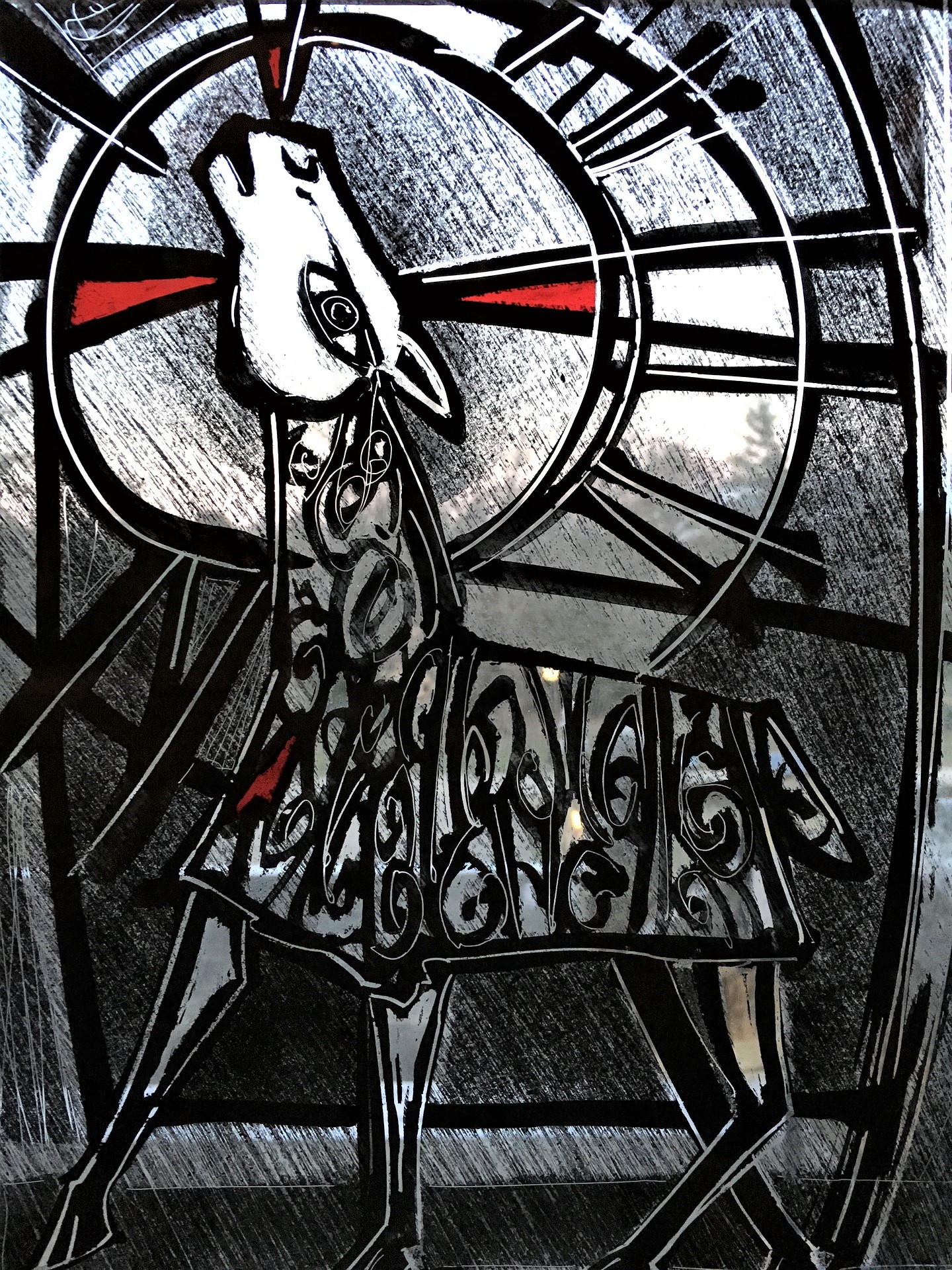
The revelation of Jesus Christ, which God gave him to show to his servants what must soon take place; and he made it known by sending his angel to his servant John, who bore witness to the word of God and to the testimony of Jesus Christ, even to all that he saw. Blessed is he who reads aloud the words of the prophecy, and blessed are those who hear, and who keep what is written therein; for the time is near. (Revelation 1:1-3)

 2023/10/02


111. Successors of the Apostles, part 6

As discussed in the previous issue, the causes of the transgressions committed by the 'man' and the 'woman' at the beginning of Genesis were of an entirely different nature from each other. Accordingly, God's response to them was also different. When the 'woman' confessed before him that she had been deceived by the 'serpent' and had disobeyed God's command, God redeemed her fault by 'the enmity that God had placed' on the spot. For this reason, the 'woman' bore the burden of delivering a child in pain, but she and her descendants, the women, were spared the work of atonement. On the other hand, for the double transgression committed by Adam, God imposed on him the atonement work, eating bread "In the sweat of your face," which extended to the male descendants (cf. Genesis 5:28-29). 

Jesus aimed the new covenant in his blood by which that work of atonement would be completed and the sins of many would be forgiven. Therefore, there are similarities between the scene where Peter the Apostle said the words revealed by his heavenly Father, "You are the Christ, the Son of the living God" (Matthew 16:16), and that of Martha of Bethania, who, being led by Jesus, confessed, "Yes, Lord; I believe that you are the Christ, the Son of God, he who is coming into the world" (John 11:27). First, on both cases, their responses convinced Jesus, who at the time had the theme of 'resurrection' as a sign of God's work, of the timeliness of taking action. Secondly, Jesus used the occasion to lead them to discern human's accidental information, which was likened to "the dragon, that ancient serpent, who is the Devil and Satan" (Revelation 20:2). 

When Peter rebuked Jesus for beginning to confide in his disciples about his passion, death and resurrection, Jesus gave him a stern word: "Get behind me, Satan! You are a hindrance to me; for you are not on the side of God, but of men" (Matthew 16:23). That is because Peter, a male and an Apostle, who had said the words revealed by the Father in heaven, was the very one who was to inherit the new covenant that Jesus would make and the redemptive work of God. Peter must distinguish between the 'human knowledge,' which took in human's accidental information within himself, and the 'divine knowledge.' 

Similarly, in bringing Lazarus back to life, Jesus reproved Martha for telling him, "Lord, by this time there will be an odor, for he has been dead four days," when Jesus commanded her, "Take away the stone" (John 11:39), saying, "Did I not tell you that if you would believe you would see the glory of God?" (John 11:40). Like the 'woman' at the beginning of Genesis, women, who were created so that they may carry another person in their bodies, have a strong sensibility of sensing human's accidental information that entered their brain as the other being. However, women must be conscious of it and discern it as human's accidental information, unlike the 'woman' who was deceived by calling it a 'serpent' because of its looks. 

The words that the heavenly Father revealed to Peter, "You are the Christ, the Son of the living God," are the foundation of these understandings and the rock on which the Church is built. They are words that should be central to the liturgy of the Mass. Hence, Jesus said, "And I tell you, you are Peter, and on this rock I will build my church, and the powers of death shall not prevail against it" (Matthew 16:18). 

To be continued.

Maria K. M.


 2023/09/25


110. Successors of the Apostles, Part 5

As we have examined, Jesus atoned for the faults and sins of the people described at the beginning of Genesis with his words. That is also why the prayer "Give us this day our daily bread" (Matthew 6:11) is placed in the middle of the Lord's Prayer. 

This prayer derives from the words God decreed in Genesis, "In the sweat of your face you shall eat bread till you return to the ground, for out of it you were taken; you are dust, and to dust you shall return" (Genesis 3:19), after Adam "have listened to the voice of your wife, and have eaten of the tree of which I commanded you, 'You shall not eat of it,'" (Genesis 3:17). Adam said to God, "The woman whom thou gavest to be with me, she gave me fruit of the tree, and I ate" (Genesis 3:12), meaning that he not only disobeyed God's command but also made a double fault because he attributed the cause of his disobedience to God. 

God said to Adam, "[I]n toil you shall eat of it all the days of your life" (Genesis 3:17), and required him to atone for these faults by eating bread "In the sweat of your face." That is the reason why Jesus chose men to be Apostles. Jesus trained them and wanted them, male like Adam, to accept the work of the new covenant so that they could continue his work of redemption. Therefore, at the last supper, he entrusted them with the work of giving birth to the Eucharist in collaboration with the Holy Spirit, saying, "Do this in remembrance of me" (Luke 22:19). That was a work of continuing to perform the sign of bread, as Jesus did, in response to the prayer, "Give us this day our daily bread", by eating bread "In the sweat of your face." 

The first 'woman' also disobeyed God's words, being deceived by the 'serpent.' God said to the 'serpent,' "I will put enmity between you and the woman, and between your seed and her seed; he shall bruise your head, and you shall bruise his heel" (Genesis 3:15), and added to the woman's body the function of conveying to her descendants the 'enmity God put' so that people could sense the 'serpent' henceforth. This heavy responsibility caused the women to bear children in pain (cf. Genesis 3:15-16). By these women, the successors of the Apostles, who would carry on Jesus' work of redemption, would be born. Jesus, therefore, bestowed also on women the words that his heavenly Father revealed to Peter the Apostle: "You are the Christ, the Son of the living God" (Matthew 16:16). 

That happened in a conversation between Jesus, who had come to Bethany to raise Lazarus, and Martha, who had come out to meet him. This time, Jesus rewrote the words "You will not die" that the "serpent" said to the woman in Genesis into the Word of God by telling it as the Word (cf. blog№108). That is as follows:

"Jesus said to her, 'I am the resurrection and the life; he who believes in me, though he die, yet shall he live, and whoever lives and believes in me shall never die. Do you believe this?' She said to him, 'Yes, Lord; I believe that you are the Christ, the Son of God, he who is coming into the world.'" (John 11:25-27). 

To be continued.

Maria K. M.


 2023/09/18


109. Successors of the Apostles, part 4

Jesus' "my church" (Matthew 16:18) was manifested by the disciples whom the Father had drawn to Jesus (cf. John 6:44) at the scene of the crucifixion. At the same time, Jesus, by receiving and drinking of "the fruit of the vine" (cf. John 19:30), announced that the "kingdom of God" had come. That is because he had said, "[F]rom now on I shall not drink of the fruit of the vine until the kingdom of God comes" (Luke 22:18) (cf. blog № 96). 

This scene of the crucifixion coincides with that of the institution of the Eucharist the night before, at which Jesus commanded, "Do this in remembrance of me" (Luke 22:19), and is reproduced in the place the Mass is celebrated. Jesus gave Peter the "keys of the kingdom of heaven," i.e., the "key of the bottomless pit" (cf. blog № 106), to block man's accidental information from arising in this place of gathering of believers. 

In bestowing these keys on Peter, Jesus testified, "[W]hatever you bind on earth shall be bound in heaven, and whatever you loose on earth shall be loosed in heaven" (Matthew 16:19). That was because Jesus wanted the use of these "keys" to be done on earth as it is in heaven. At his last supper, Jesus said, "I have earnestly desired to eat this passover with you before I suffer; for I tell you I shall not eat it until it is fulfilled in the kingdom of God" (Luke 22:15-16), and so, he certainly desired it and is still waiting for it. 

The words "until it is fulfilled in the kingdom of God" refer to the time when the liturgy of the Mass is completed. The completed Mass liturgy can demonstrate the efficacy of the "key of the bottomless pit." It then becomes the place where the Lord's Prayer is fulfilled. Jesus made known to believers the name of the Father in heaven and announced the coming of the Kingdom of God, where the name of the Father is hallowed. He prepared the daily bread at the Last Supper for them so that they could "take" and "eat" it following his command and thereby realize forgiveness of our sins (cf. blog № 108). To protect them from temptation and to save them from evil, i.e., to block man's accidental information from occurring, Jesus gave Peter the Apostle the "key of the bottomless pit," the "keys of the kingdom of heaven," which means that he asked the will of the heavenly Father "be done on earth as it is in heaven." 

The successors of the Apostles are in charge of perfecting and exercising the liturgy of the Mass. All the believers on earth who inherit the Lord's Prayer, which Jesus taught, are with them to fulfil the Passover in the Kingdom of God so that Jesus may eat the Passover meal again. 

To be continued.

Maria K. M.


 2023/09/11


108. Successors of the Apostles, Part 3

In the last issue, I mentioned that through Jesus' resurrection, the "charge I have received from my Father" (John 10:18) was fulfilled, and "Death and Hades" (Revelation 1:18) were resolved. This time, we will discuss this topic further. 

The "serpent," man's accidental information (cf. blog № 4), first appeared in Genesis, when man became plural, created as male and female. Here, God commanded the man, "You may freely eat of every tree of the garden; but of the tree of the knowledge of good and evil you shall not eat, for in the day that you eat of it you shall die" (Genesis 2:16-17), whereas what the "woman" remembered was as follows: "We may eat of the fruit of the trees of the garden; but God said, 'You shall not eat of the fruit of the tree which is in the midst of the garden, neither shall you touch it, lest you die'" (Genesis 3:2-3). This contrast shows that in the memory of the two, the "tree of the knowledge of good and evil" was replaced by the "tree in the midst of the garden," and the words "neither shall you touch it" were added. 

The confusion in their memory eventually developed into the specific act of "taking" and "eating" of the tree of the knowledge of good and evil, with God's words "you shall die" replaced by the words of the "serpent" "You will not die" (Genesis 3:4). Later, they had their first experience of man's "dying" when Cain killed Abel. But at this time, the words "You will not die" were affixed to their memory as human knowledge. For this reason, people must have developed an image of the afterlife, even as they have performed burial rites and acknowledged people's death. 

Jesus reiterated the words "You will not die" as the Word by saying, "I am the resurrection and the life; he who believes in me, though he die, yet shall he live, and whoever lives and believes in me shall never die" (John 11:25-26). He overwrote the words of the "serpent" in Genesis with the Word of God. He also attested to this fact by resurrecting after his Passion and Death. 

Jesus, at the last supper, took bread, blessed it, broke it and said, "Take, eat; this is my body" (Matthew 26:26) and gave it to his disciples. The words "this is my body" suggest Jesus' words testifying about himself (cf. John 6:51). Believers, by remembering what it was that Jesus commanded to "take and eat" and by "taking" and "eating" the Eucharist with their own hands following his command, will atone for the two in Genesis who "took" and "ate" against God's command. For believers are the successors to the Word of Jesus. The words of Jesus' testimony are as follows:

"I am the living bread which came down from heaven; if any one eats of this bread, he will live for ever; and the bread which I shall give for the life of the world is my flesh" (John 6:51). 

To be continued.

Maria K. M.


 2023/09/04


107. Successors of the Apostles, Part 2

As discussed in the previous article, the "keys of the kingdom of heaven" (Matthew 16:19), which Jesus gave to Peter, was the "key of the bottomless pit" (Revelation 20:1). The "keys" mentioned here are vital to understanding and solving things, as Jesus described them as "bind" and "loose" (cf. Matthew 16:19). 

The above issue started when Jesus, in the Gospel of Matthew, asked his disciples, "But who do you say that I am?"(Matthew 16:15). In response to Peter's answer, "You are the Christ, the Son of the living God" (Matthew 16:16), Jesus said, "[F]lesh and blood has not revealed this to you, but my Father who is in heaven" (Matthew 16:17). These words of Peter were God's timely announcement of the "hour" when Jesus, "the Son of the living God," would manifest himself as "the Lamb of God, who takes away the sin of the world" (John 1:29). 

It is written, "From that time Jesus began to show his disciples that he must go to Jerusalem and suffer many things from the elders and chief priests and scribes, and be killed, and on the third day be raised" (Matthew 16:21). From those words of Peter onwards, Jesus proceeds towards his Passion and death. 

As he said, "No one takes it [my life] from me, but I lay it down of my own accord. I have power to lay it down, and I have power to take it again; this charge I have received from my Father" (John 10:18), Jesus, who is God, came down to earth with the "charge I have received from my Father" to undergo suffering and death as a human being. This charge was fulfilled in the Book of Revelation in the "manner of the Spirit of prophecy" as follows: "Fear not, I am the first and the last, and the living one; I died, and behold I am alive for evermore, and I have the keys of Death and Hades" (Revelation 1:17-18). 

From this fact, "the charge Jesus has received from his Father" can be paraphrased as "the keys of Death and Hades." Hence, Jesus gave Peter the words of assurance, "I tell you, you are Peter, and on this rock I will build my church, and the powers of death shall not prevail against it" (Matthew 16:18), before giving him the "keys of the kingdom of heaven," namely, the "key of the bottomless pit." 

Jesus then underwent the Passion and death and rose again. Through his resurrection, the "charge I have received from my Father" was fulfilled, and "Death and Hades" were resolved. Jesus gave Peter the "key of the bottomless pit," the "keys of the kingdom of heaven" on the premise that he himself would solve the problem of "Death and Hades." This key would solve the problem of man's accidental information (cf. blog №4).

To be continued.

Maria K. M.


 2023/08/28


106. Successors of the Apostles, Part 1

We will move on in our discussion of the Book of Revelation. "Then I saw an angel coming down from heaven, holding in his hand the key of the bottomless pit and a great chain. And he seized the dragon, that ancient serpent, who is the Devil and Satan, and bound him for a thousand years, and threw him into the pit, and shut it and sealed it over him, that he should deceive the nations no more, till the thousand years were ended. After that he must be loosed for a little while" (Revelation 20:1-3). 

The description, "coming down from heaven, holding in his hand the key of the bottomless pit and a great chain," suggests that the "key" the angel holds is that of the kingdom of heaven. That means the "key of the bottomless pit" is the key of the kingdom of heaven. So, we can see that the above description of Revelation is the fulfilment of the following words of Jesus in the Gospel of Matthew in the manner of the "Spirit of prophecy" with the "key of the kingdom of heaven" as the clue. "I will give you the keys of the kingdom of heaven, and whatever you bind on earth shall be bound in heaven, and whatever you loose on earth shall be loosed in heaven" (Matthew 16:19). 

The "keys of the kingdom of heaven" in these words of Jesus' testimony were the "key of the bottomless pit" that the angel brought to earth from heaven in the Book of Revelation. The "keys" Jesus said he would give Peter could seize "the dragon, that ancient serpent, who is the Devil and Satan," bind him, cast him into the bottomless pit, and lock him up. It keeps the "ancient serpent," i.e., man's accidental information, which occurs where several people are gathered (cf. blog №4), from arising among "those who are invited to the marriage supper of the Lamb." 

This scene in Revelation is guided by the "blessedness" of "those who are invited to the marriage supper of the Lamb" (cf. Revelation 19:9). So, we can say that the expressions "for a thousand years" and "till the thousand years were ended" refer to the time Jesus commanded, "Do this in remembrance of me" (Luke 22:19), the time when the Mass is celebrated. 

As we discussed in the last issue, the place where the Mass is celebrated is where believers who hear the Word were born anew as children of God, from which they came and to which they will return. This place must function as the place where every lust of the believer is most reasonably removed, and it must be the place where the believer can say that they saw the Lord in the Eucharistic Host face to face. For this to happen, it is necessary to seal off man's accidental information which may arise in this place. The successors of the Apostles, having been given the authority to use the "keys of the kingdom of heaven," or the "key of the bottomless pit," which can bind and loose on earth, have a responsibility to exercise that authority.

To be continued

Maria K. M.


 2023/08/21


105. The Flesh of All Men, Small and Great

So far, we have seen that the words, or testimony, of Jesus in the Gospels were fulfilled in the Book of Revelation in the manner of the "Spirit of prophecy." Believers, who are with and in concert with the Holy Spirit, are the ones who are to substantiate this new prophecy. 

While Jesus was on earth, his disciples were protected by the Word that proceeded from his mouth and by the name of the Father (cf. John 17:12). They were safeguarded from "the beast" and the "false prophet." Today believers who hear the Word are protected by receiving the "sword of the Word," which has become the living word again by the Holy Spirit, and by experiencing themselves hearing the Word (cf. blog № 104). That is because they will experience distinguishing "the beast" and the "false prophet" from themselves. This experience is transformed into recognition, assisted by the training of Revelation. Thus, the colour of Jesus' discipleship gradually oozes outwards from them. 

In addition, as Jesus described in his commentary on the Parable of the Weeds, "He who sows the good seed is the Son of man; the field is the world, and the good seed means the sons of the kingdom" (Matthew 13:37-38), believers are the "seeds that fell on good soil" in the Parable of the Sower (cf. Matthew 13:8). 

These seeds are not of those who mocked and reviled Jesus on the cross, such as the chief priests, the scribes and the elders, nor of those who were curious to hear the words of Jesus who cried out loudly before his death (cf. blog № 99), much less of the centurion, who stubbornly refused his visit out of fear that his involvement with him would be known, saying, "Lord, I am not worthy to have you come under my roof" (Matthew 8:8), who did not even meet him in person, saying, "But say the word, and let my servant be healed" (Luke 7:7) (cf. blog № 100). 

The believers are Jesus' disciples to whom "it has been given to know the secrets of the kingdom of heaven" (Matthew 13:11). They are the believers likened to "all men, …, both small and great" (Revelation 19:18) who were fulfilled in the manner of the "Spirit of prophecy" in the Book of Revelation (cf. blog № 101). 

It is essential for believers to constantly ask God to remove from themselves all the lusts consciously and rationally that are created from human knowledge and experience, which they have left untreated. Once these lusts, which they have been pursuing, are devoured by "all the birds that fly in midheaven" (Revelation 19:17), they will come to see what they truly seek. 

The place where every lust of the believers who hear the Word is removed most reasonably is where they were born anew as children of God, the place from which they came and to which they are going. At that place, the Eucharist is brought forth, lifted up like Jesus, and draws all men to himself (cf. John 12:32). Just as Moses had seen the Lord face to face, Jesus' disciples saw the Lord Jesus. And now the believers see the Lord in the Eucharist at that place. 

Maria K.M.


Most Favourite